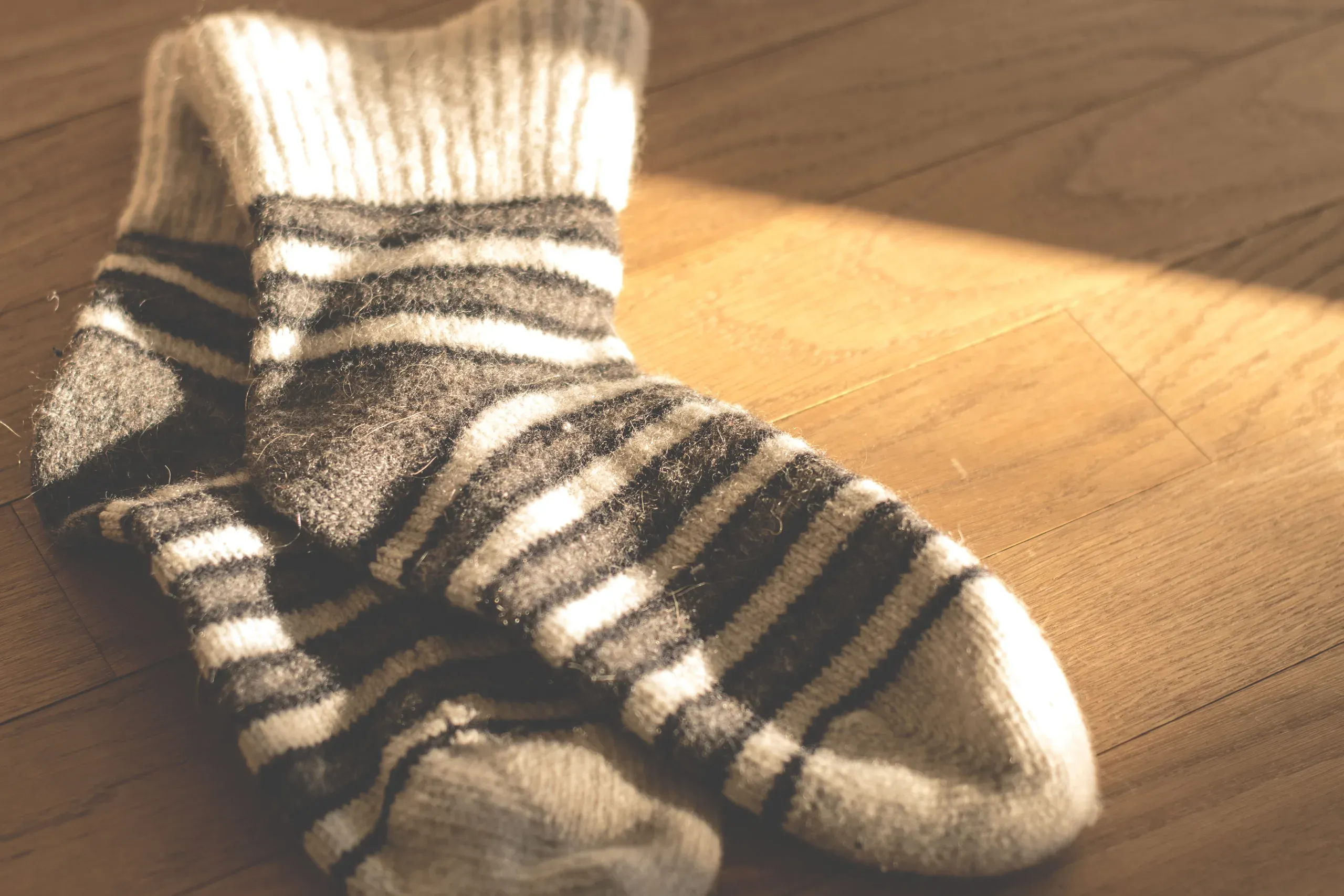
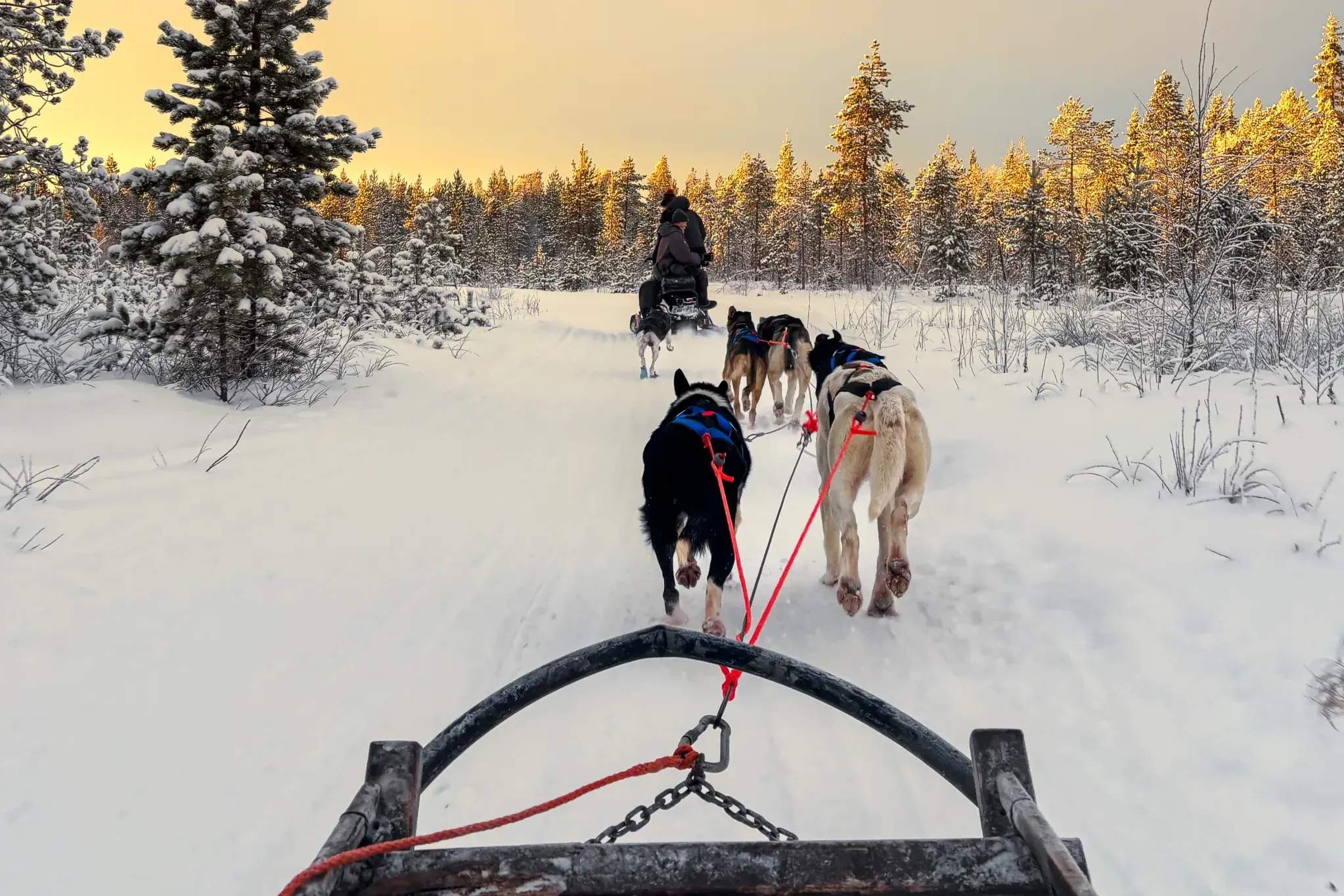
Pack layers for under a suit rather than the suit itself. Guided winter safaris typically include thermal overalls, boots and mittens, so what you need from home is a good base layer of wool or synthetic fabric, a warm mid layer, wool socks, a hat and your own gloves, plus a windproof, waterproof coat with a hood and boots with grip for walking about town. Do not buy a snowsuit for a week of tours. Rent it if you will be outdoors on your own.
Packing lists for Lapland tend to be long and expensive, because they assume
you will spend the week outdoors in your own clothes. Most visitors do not:
guided winter safaris in Lapland typically include clothing rental in the
package.1 So the useful question is
not what keeps you warm, but what goes under the suit you will be lent.
What goes under the suit
The base layer is where warmth starts: long underwear, ideally in natural fibres
such as merino wool, bamboo or
silk.1 The layer next to your skin
should keep you dry, because a damp base layer turns cold the moment you stop
moving.2 Add a warm mid layer, wool
socks, a hat and your own thin gloves to wear inside the lent mittens.
Tripadvisor ratings, 18 Rovaniemi operators
Highest first
Snowtrail Safaris 5.0
Nordic Odyssey 5.0
Nordic Adventures 4.9
Arctic GM 4.9
Book Lapland 4.9
Bearhill Husky 4.9
Arctic Attitude 4.9
StayLapland 4.8
Wild About Lapland 4.7
Wild Nordic 4.7
Lapland Winter Park 4.6
Safartica 4.5
Nordic Unique Travels 4.5
Apukka Resort 4.4
Lapland Welcome 4.3
Arctic Circle Snowmobile Park 4.3
Arctic Circle Husky Park 4.2
Raitola 3.4
<44.04.55.0
Ratings read from Tripadvisor. The shaded compartment left of the divider holds any score below 4.0. We record the score only; review counts and review text are not part of our comparison.
What you need between tours
The hours in town, at the village and on the way to dinner are when you are in
your own clothes. For those, a windproof, waterproof coat with a hood does most
of the work.1 Boots matter more
than people expect: leave room to wiggle your toes, because a tight boot is a
cold boot, and choose soles with grip, or add ice cleats, for icy
pavements.2
What not to buy
A snowsuit and heavy boots for a week of guided tours. If you will be outdoors
on your own for long periods, rent instead: winter clothing can be pre-ordered
and collected at the airport, and Lapland’s resorts have shops with the
gear.1
The exception is the tour that lends nothing. Many kennels lend clothing –
Erä-Susi Huskies and
Pallas Husky list it among what is
included – but some do not, and those say so on their pages. Read the
“included” line before deciding what to pack, and if it is silent, ask.
Whatever you will be warm in on the way there and comfortable in indoors. A meeting at Santa Claus Office is indoors, so the snowsuit question does not arise unless you arrive on a safari, in which case you are wearing the operator's. The one thing to plan for is the queue and the walk across the village, which in December can mean standing outside, so the same base layers, hat and mittens apply.
Are children's sizes available on tours?
Usually, but check the youngest and smallest sizes for your specific tour. Operators that lend clothing list it in what is included, and the family guides on this site note where small sizes are a question. If a toddler is coming, bring their own warm suit anyway: it is the one item worth packing whole, because it is what keeps them comfortable between the tours as well as on them.
Is cotton really a problem?
Next to the skin, yes. The layer against your body should keep you dry, and cotton holds sweat, which then cools you as soon as you stop moving. Wool, including merino, or synthetic fabric does the job. Cotton is fine for a T-shirt indoors or as an outer layer on a mild day, but not for the base layer on a sled or a snowmobile.
Lapland Handbook is written by its editorial staff in Rovaniemi. Every price, age limit and group size in a comparison is read from the operator's own page and marked "Not stated" when the operator does not publish it. Each guide names who should not book, and names the operator that suits each kind of group, whichever it is.
Rovaniemi's winter tours do sell out – December and the week around New Year first, and the small-group ones before the rest. Booking here goes straight to the operator at their own published price, and the code LH10 takes 10% off it.
We would like to count visits, so we can see which guides get read. That needs a cookie. Nothing else on this site does, we show no advertising, and refusing changes nothing about what you can read or book. What we measure and why.