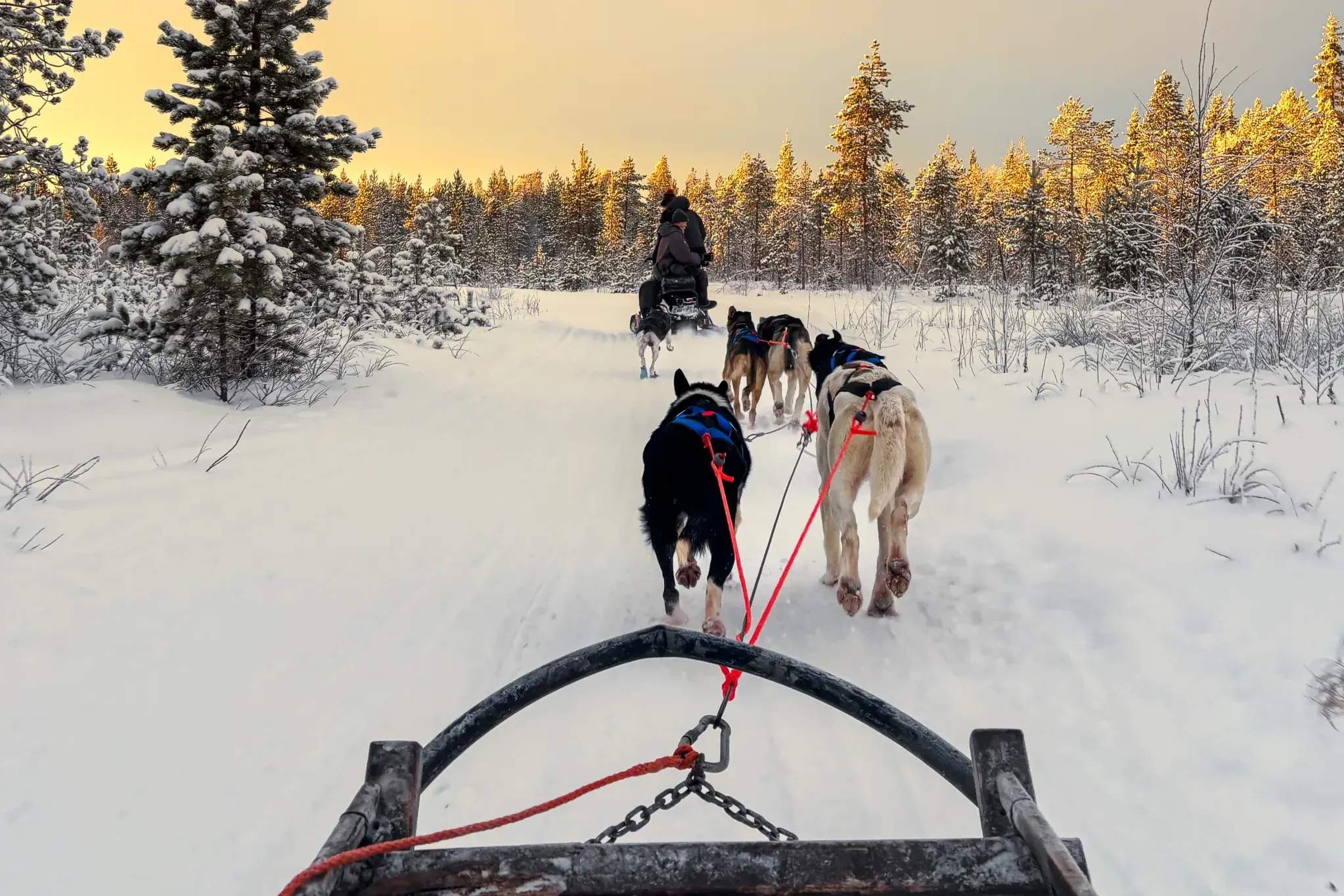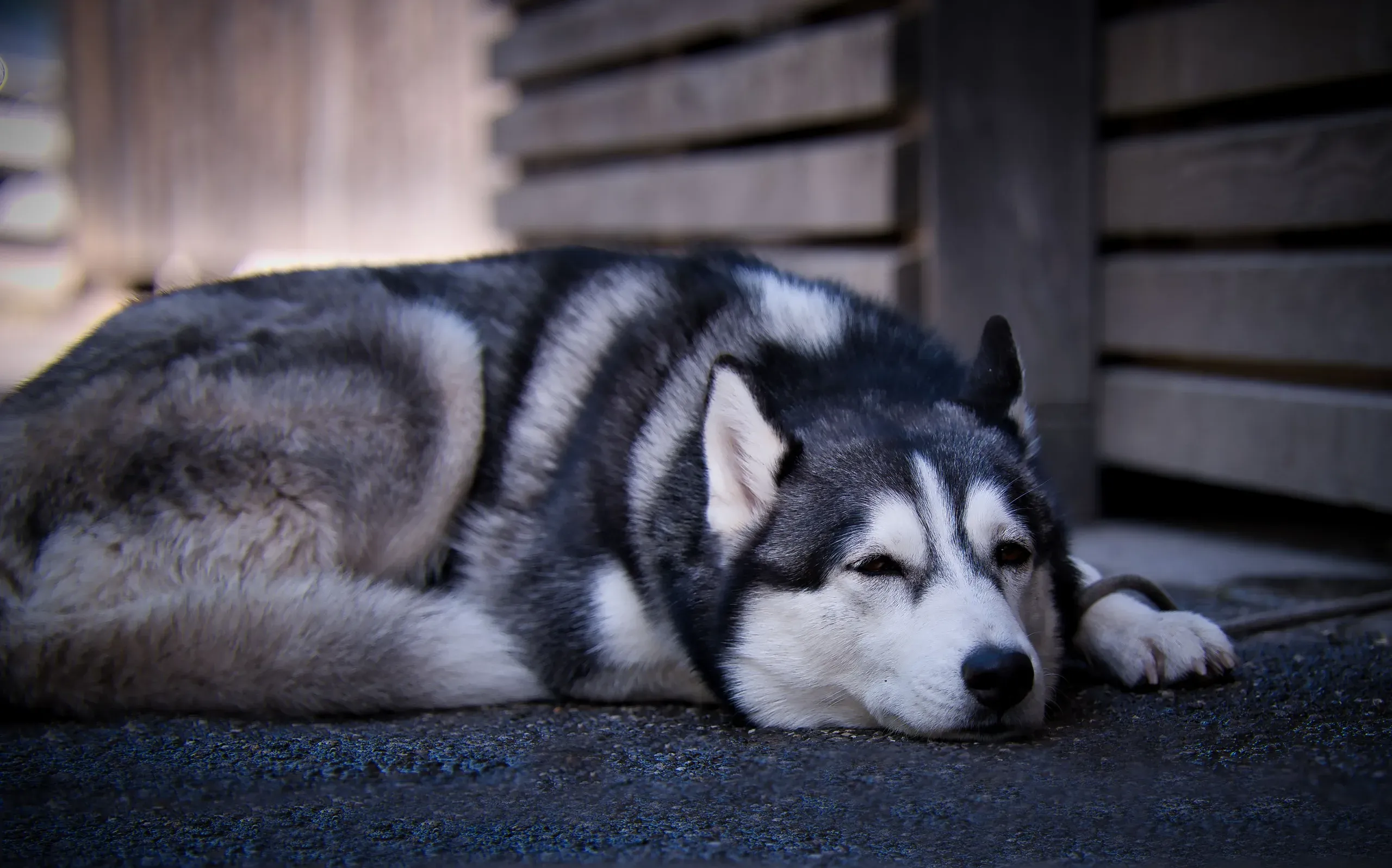
The question comes up in nearly every family planning a husky ride, and it usually gets one of two answers: reassurance from the people selling the ride, or outrage from people who would never book one. Neither tells you much. A better starting point is the rule book, because Finland has one, and it names sled dogs.
The law covers sled dogs by name
The Finnish government decree on keeping dogs and other companion animals counts sled dogs among the animals it covers.1 That matters, because it means a kennel of working huskies is held to the same written minimums as any other dog keeper, with one adjustment made specifically for it.
What every kennel must provide
Exercise and company. Adult dogs must be taken out every day, often enough, with particular attention to their need to move, and they must be able to hear and see what goes on around them and have social contact.1
Limits on chaining. A dog may be kept tethered outdoors other than temporarily only right beside an inhabited building, and then with at least 40 square metres to move in, a line that cannot wind round a post or tree, and a wide, adjustable collar that is neither metal nor choking. A dog under a year old may be tethered only temporarily.1
Shelter and space. A dog kept outdoors or in a run must be able to reach a proper kennel box or resting place out of the weather, with tight walls, a roof and floor insulated where needed, a base off the ground and bedding. Runs have minimum sizes by the number and weight of the dogs: for dogs of around 20 kilos, eight square metres for one, ten for two and twenty for six, scaled up for larger groups.1
Water in frost. The one rule written for sled-dog kennels: where water freezes, professional sled-dog kennels need not keep it available continuously, but must offer it at least three times a day, and nursing mothers and puppies must always have it.1
A kennel of this size also has to notify the Food Authority before it starts keeping dogs, which the kennels around Rovaniemi explains.