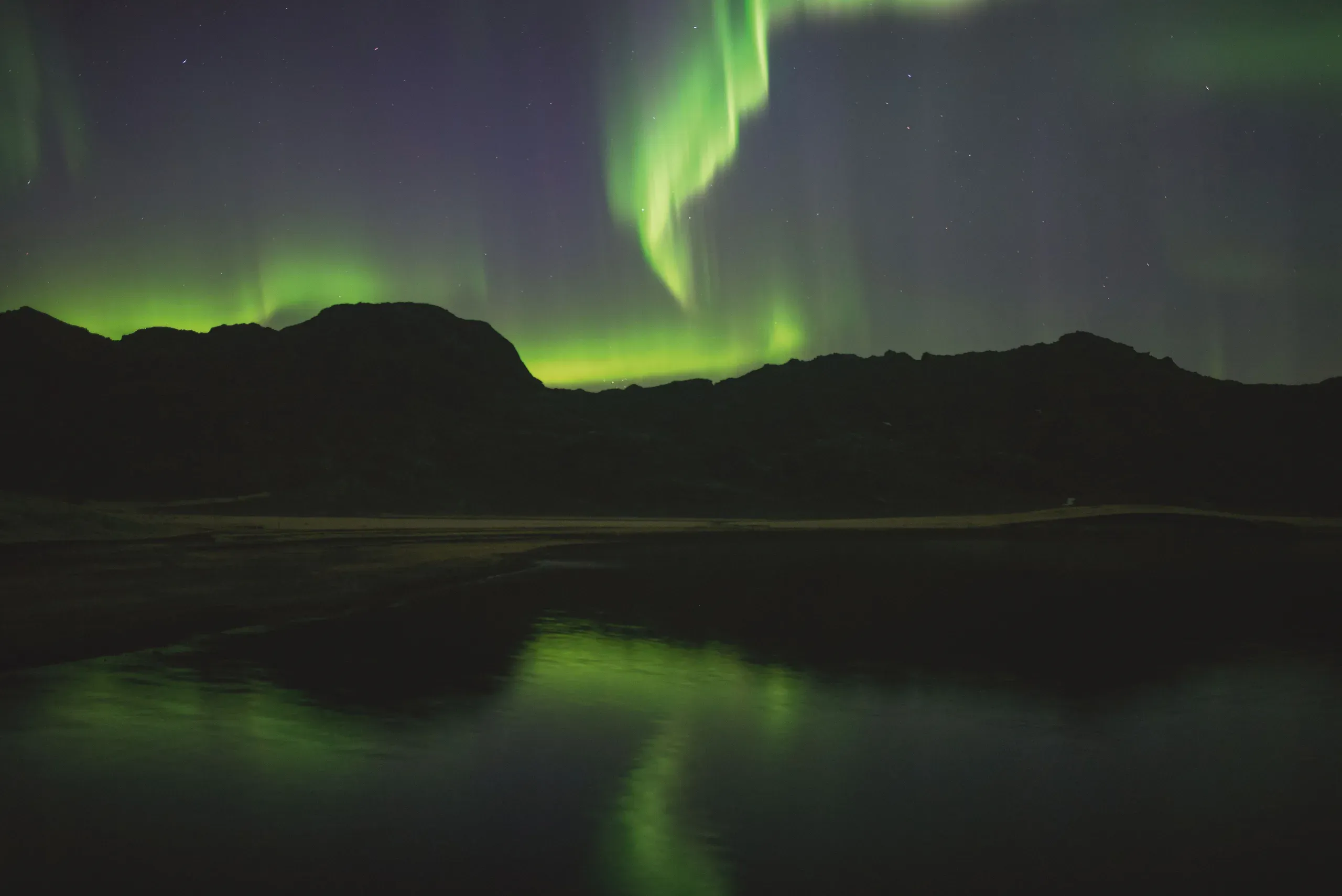
Buy nights. Everything else is smaller. On the Meteorological Institute's own figures the regional spread across Finland is about threefold – 75 per cent of dark clear nights at Kilpisjärvi, 50 in central Lapland, 25 around Oulu and Kuusamo, once a month on the south coast – while each extra night you stay is a whole fresh draw on the cloud that ends most attempts. Be outside around midnight, because that is when displays peak. And the background matters right now: NOAA's panel put the maximum of Solar Cycle 25 at 2025, with Cycle 26 not starting before 2029, so the winters either side of this one are the strong end of an eleven-year pattern.
Everyone who wants to see the aurora asks the same question, and almost
everyone optimises the wrong variable. Here are the five levers, biggest first.
1. The number of nights
Nothing else comes close, and it is the only one you control completely.
Each night you are in Lapland is an independent draw against the cloud. Two
nights is not twice as good as one in the way that matters; it is the
difference between one chance and two, and by the third the odds of catching at
least one clear window have moved from a gamble to a reasonable expectation.
This is why
where else in Finland to see the northern lights
concludes that three nights at Rovaniemi beat one night at Ivalo. It is the
single most useful sentence on this site about the aurora.
2. Cloud
The one nobody can plan around, and the reason the ceiling is never the
forecast.
Every probability figure published for the aurora is per dark and cloudless
night. Cloud is what ends most attempts in Finland, it is not predictable more
than a few days out, and no amount of latitude, money or equipment fixes it.
What can be done about it is movement. A guided chase exists to drive to
wherever the overcast is not, which the
northern lights guide sets out – and
which is why a fixed roof over a fixed bed, sold as an aurora product, is the
weakest thing on this list.
3. The hour
Cheap, and routinely ignored.
The Meteorological Institute puts the typical display at midnight, and a couple
of hours either side.1
The common failure is stepping outside at nine, seeing nothing, and going to
bed before the best two hours have started. That is not a bad night; it is an
early one. It is also why
the age limit question turns out to
be about bedtimes.
Tripadvisor ratings, 18 Rovaniemi operators
Highest first
Snowtrail Safaris 5.0
Nordic Odyssey 5.0
Nordic Adventures 4.9
Arctic GM 4.9
Book Lapland 4.9
Bearhill Husky 4.9
Arctic Attitude 4.9
StayLapland 4.8
Wild About Lapland 4.7
Wild Nordic 4.7
Lapland Winter Park 4.6
Safartica 4.5
Nordic Unique Travels 4.5
Apukka Resort 4.4
Lapland Welcome 4.3
Arctic Circle Snowmobile Park 4.3
Arctic Circle Husky Park 4.2
Raitola 3.4
<44.04.55.0
Ratings read from Tripadvisor. The shaded compartment left of the divider holds any score below 4.0. We record the score only; review counts and review text are not part of our comparison.
4. Latitude
Real, and about a factor of three from the bottom of Finland to the top – which
is less than the marketing implies and more than nothing.
The institute’s regional figures, per dark cloudless night: Kilpisjärvi about
75 per cent, central Lapland including Ylläs, Levi and Saariselkä roughly 50,
central Finland around Oulu and Kuusamo roughly 25, and the south coast about
once a month.1
Note where the big step is. It is not between the Lapland resorts, which sit in
one bracket together –
Saariselkä is in the same band as Levi –
but between Lapland and everywhere south of it, and again up at Kilpisjärvi,
which almost no visitor goes to.
5. The solar cycle
The lever people never check, and the one that is doing something interesting
right now.
NOAA’s prediction panel put the maximum of Solar Cycle 25 at a smoothed sunspot
number of 115 in July 2025, with the peak expected somewhere between November
2024 and March 2026, and Cycle 26 not beginning before January
2029.2
So we are at or just past the top. Activity declines gradually from a maximum
rather than falling off, and the years immediately after a peak are often good
ones for observers. The practical reading is simple: the winters around now are
the strong end of an eleven-year pattern, and the early 2030s will not be. If
the trip has been on the list for a while, the background is in your favour.
It is a background, though. It sets the rate at which displays happen, and
cloud still decides whether you see one.
What to do with the ranking
Book nights, then a place, then a tour. In that order. Our page on
which month to come covers
the seasonal half of the same argument, and the short version is that March
gets you settled weather as well as dark evenings.
Be out at midnight, at least twice.
Put the accommodation money somewhere else. A glass roof converts your
sleeping hours into attempts, which is worth something, but
glass igloo, aurora cabin or ice hotel
sets out why it is a weaker lever than an extra night or a vehicle that moves.
Ignore the guarantee. Several operators sell one, and
what it actually attaches to
is a repeat or a refund rather than a sky.
Three is the number worth planning around, and it is not arbitrary. One night is a coin toss against the cloud, two is a coin toss twice, and by three the odds of at least one clear window have moved from a gamble to a reasonable expectation almost anywhere in Lapland. Beyond about five the returns flatten. If your trip is two nights and the aurora is the reason for it, be honest with yourself that you are buying a lottery ticket, and put the rest of the money into things that happen whatever the sky does.
Does the solar cycle mean we have missed it?
No. The decline from a maximum is gradual and the couple of years after a peak are often better for observers than the peak itself, because the large geomagnetic storms that push displays further south tend to come on the way down. What the cycle does mean is that the late 2020s will be quieter than the mid-2020s, and that if you have been putting the trip off, this is not the decade's low point. It is not a reason to book a two-night trip either: the cycle sets the background rate, and cloud still ends the evening.
Is a tour better than going out on our own?
On a clear night, no – the sky is the same sky from a hotel car park twenty minutes out of town. On a partly cloudy night, which is most of them, yes, and that is the whole value: a guide who has watched the cloud maps since morning and will drive an hour to a hole in it. If you are staying somewhere you can walk into darkness, one tour plus your own eyes on the other nights is usually the best-value arrangement.
Lapland Handbook is written by its editorial staff in Rovaniemi. Every price, age limit and group size in a comparison is read from the operator's own page and marked "Not stated" when the operator does not publish it. Each guide names who should not book, and names the operator that suits each kind of group, whichever it is.
Rovaniemi's winter tours do sell out – December and the week around New Year first, and the small-group ones before the rest. Booking here goes straight to the operator at their own published price, and the code LH10 takes 10% off it.
We would like to count visits, so we can see which guides get read. That needs a cookie. Nothing else on this site does, we show no advertising, and refusing changes nothing about what you can read or book. What we measure and why.