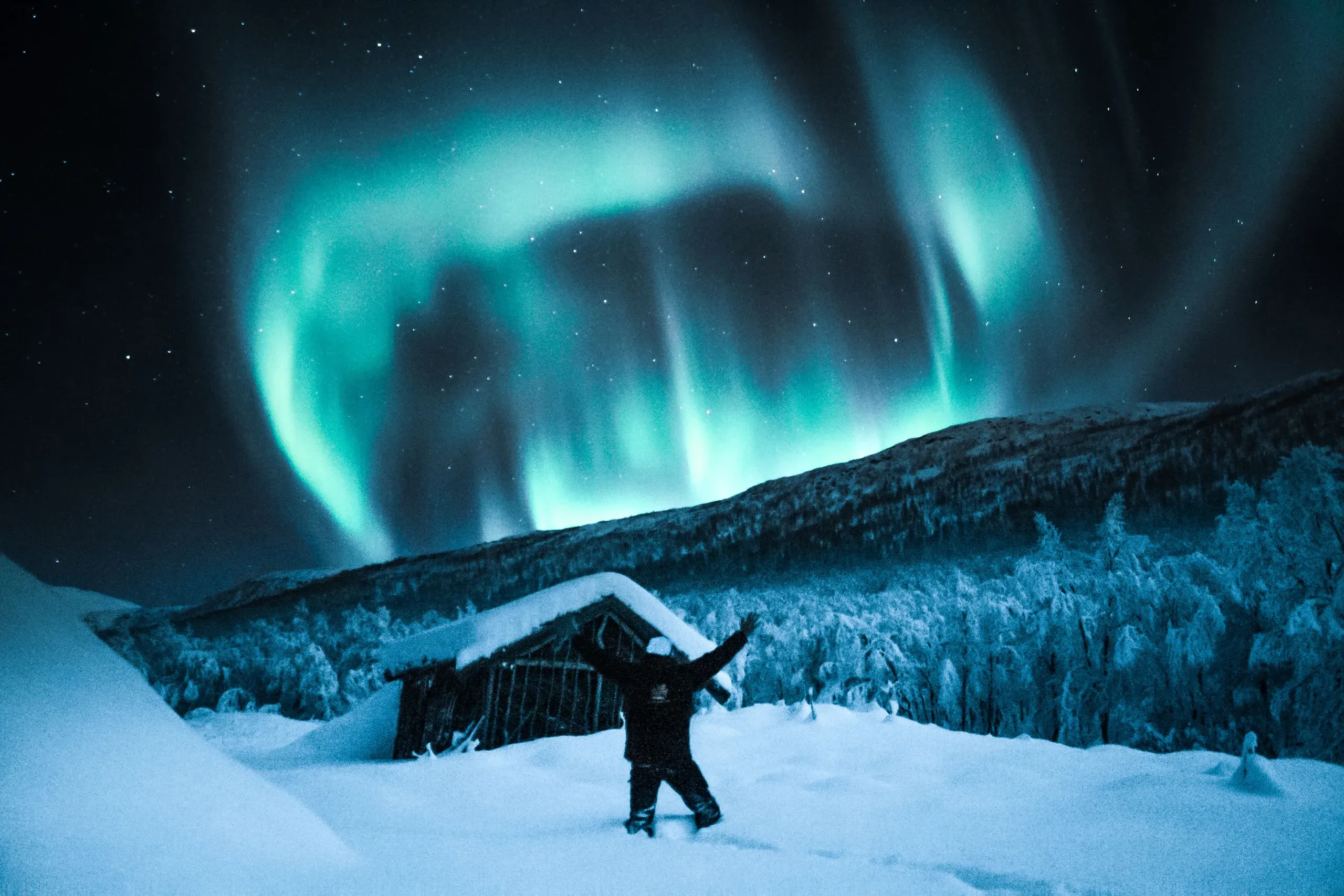
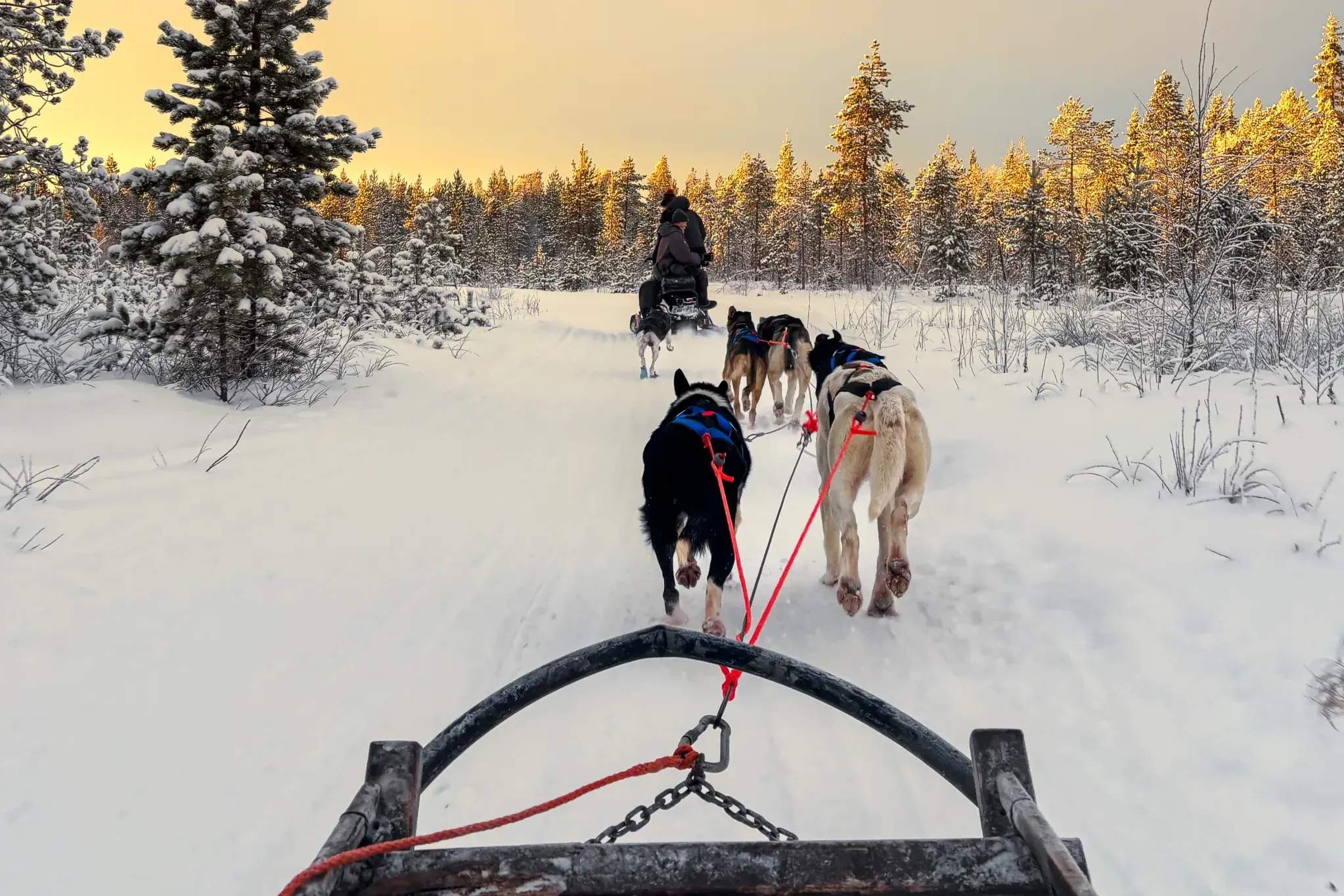
Further north is better, but not by as much as the choice of night. The Finnish Meteorological Institute publishes observation frequencies that climb steeply from the south of the country to the far north-west, and on a clear night that ranking holds. On a cloudy one it is worth nothing, and cloud is what ends most aurora nights in Finland. So the practical questions are how quickly you can get from your bed to somewhere dark, and how many nights you have. Saariselkä and Inari via Ivalo, Levi and Ylläs via Kittilä, and Ruka via Kuusamo are all further north or darker than Rovaniemi and all reachable in well under an hour from an airport.
Almost every answer to this question is a ranking by latitude. It is not wrong.
It is just far less useful than it looks, because on any particular night the
thing that decides whether you see the aurora is the cloud overhead, and cloud
does not care that Ivalo is two hundred kilometres north of Rovaniemi.
The Finnish Meteorological Institute publishes observation frequencies by
region, and they do climb steeply from the south of the country to the far
north-west. It also says the two things that actually stop people seeing the
lights are cloud and artificial light, and advises moving away from built-up
areas to somewhere dark with a view of the northern
sky.1 That second sentence is the
one worth planning around. The figures are set out against the rest of the
country on our page about
whether you can see the aurora from Helsinki,
which is where the south-to-north spread is easiest to read.
So this page ranks the alternatives by two things you can do something about:
how far the dark is from your bed, and how easy the place is to reach at all.
What sort of bed it is comes after that, and
glass igloo, aurora cabin or ice hotel
explains why only one of those three is even a lights product.
The airport is the real constraint
Finland’s northern airports publish their own distances, and they explain the
shape of aurora tourism better than any map of the auroral oval does. Levi is
fifteen kilometres from Kittilä Airport and Ylläs about thirty-five; Ruka is a
half-hour drive from Kuusamo; Ivalo Airport serves Saariselkä and Lake
Inari.2
Every one of those is a short transfer. That matters more than it sounds,
because aurora watching is a nocturnal activity you may want to repeat three
nights running, and a place that is an hour from anywhere is a place you will
only go out from once.
Saariselkä and Inari, via Ivalo
The furthest north of the practical options, and the darkest. Inari is a small
village on a very large lake, Saariselkä a small resort at the edge of a
national park, and both are properly away from any significant light. How good
the odds there actually are, in the institute’s own figures, is on
northern lights in Saariselkä –
the short version is that they are in the same bracket as Levi and Ylläs rather
than a class above.
The trade is that there is less around you. If a party wants a town on the
afternoons when nobody is on a tour, this is the wrong end of the country for
it, and our comparison of
Rovaniemi against the other Lapland bases
goes through what that actually feels like across a week.
Levi and Ylläs, via Kittilä
North of Rovaniemi, easy to reach, and with the fells doing something useful:
altitude gets you above the worst of the low cloud and gives you a horizon.
Both are ski resorts with everything a ski resort has, which cuts both ways –
plenty to do, and plenty of light to walk away from before you look up.
Tripadvisor ratings, 18 Rovaniemi operators
Highest first
Snowtrail Safaris 5.0
Nordic Odyssey 5.0
Nordic Adventures 4.9
Arctic GM 4.9
Book Lapland 4.9
Bearhill Husky 4.9
Arctic Attitude 4.9
StayLapland 4.8
Wild About Lapland 4.7
Wild Nordic 4.7
Lapland Winter Park 4.6
Safartica 4.5
Nordic Unique Travels 4.5
Apukka Resort 4.4
Lapland Welcome 4.3
Arctic Circle Snowmobile Park 4.3
Arctic Circle Husky Park 4.2
Raitola 3.4
<44.04.55.0
Ratings read from Tripadvisor. The shaded compartment left of the divider holds any score below 4.0. We record the score only; review counts and review text are not part of our comparison.
Ruka, via Kuusamo
The odd one out: further south than the Lapland resorts and further east, in
Kuusamo rather than Lapland proper – a distinction with consequences, which
the husky page for Ruka works through along with
what a day with the dogs there is actually like. The odds are lower than at Ivalo and the
landscape is different – deeper forest, no open fells. It earns its place
because the transfer is short and because Oulanka National Park is next door,
which gives a trip a daytime reason to exist.
What none of them fixes
Nowhere in Finland will sell you a guaranteed aurora, and the operators who
imply otherwise are the ones to be careful with. The
northern lights guide sets out what a
tour can and cannot change, and the honest summary is that a tour buys you
mobility and somebody else’s judgement about where the clear sky is – not the
lights themselves.
Two practical consequences. First, buy nights rather than latitude: three
nights at Rovaniemi beat one night at Ivalo, by a long way – and
the five levers ranked by size puts
that argument next to the solar cycle, which almost nobody checks. Second, if you are
staying in one place all evening rather than chasing, the thing you are really
buying is somewhere warm to wait, which is what an
aurora cabin evening is and what a
chase by minibus is not. Those are
different products and the difference is the whole decision.
Which to choose
Best odds, and you have the days: Saariselkä or Inari, via Ivalo.
Good odds with a resort around you: Levi or Ylläs, via Kittilä. The
glass-roofed cabin resorts turn up at both ends of this list –
Northern Lights Village has one site at
Saariselkä and another beside Levi, which is worth knowing before a package
quotes you “the village” as though there were one.
Short trip, flying once, other things to do: Rovaniemi. It is the southern
end of this list and it is still Lapland, and the
month-by-month guide will tell you what
else is running while you wait for a clear night.
Is Finnish Lapland better than Norway or Sweden for this?
Not meaningfully, at the same latitude. The aurora oval does not stop at a border, and northern Norway, northern Sweden and northern Finland sit under the same band. What differs is weather and landscape rather than the lights: the Norwegian coast is cloudier and milder because of the sea, and inland Finland and Sweden are colder, drier and more often clear. If your trip is already pointed at Finland, the country is not the thing holding your odds down.
Do we need to leave the town at all?
Usually yes, but not far. Light pollution washes out a weak display long before cloud does, and the Finnish Meteorological Institute's own advice is to move away from built-up areas to somewhere dark with a clear view of the northern horizon. In most Lapland towns that is a fifteen-minute drive rather than an expedition, and a frozen lake, a river bank or an unlit road facing north will do it.
How many nights should we allow?
Three if you can, and treat anything shorter as a lottery. On a clear night in the far north the odds are genuinely high, but a single cloudy week happens often enough that people who book two nights and see nothing are not unlucky, just under-supplied. Every extra night is a fresh draw on the weather, which is why nights matter more than latitude for most trips.
Lapland Handbook is written by its editorial staff in Rovaniemi. Every price, age limit and group size in a comparison is read from the operator's own page and marked "Not stated" when the operator does not publish it. Each guide names who should not book, and names the operator that suits each kind of group, whichever it is.
Rovaniemi's winter tours do sell out – December and the week around New Year first, and the small-group ones before the rest. Booking here goes straight to the operator at their own published price, and the code LH10 takes 10% off it.
We would like to count visits, so we can see which guides get read. That needs a cookie. Nothing else on this site does, we show no advertising, and refusing changes nothing about what you can read or book. What we measure and why.