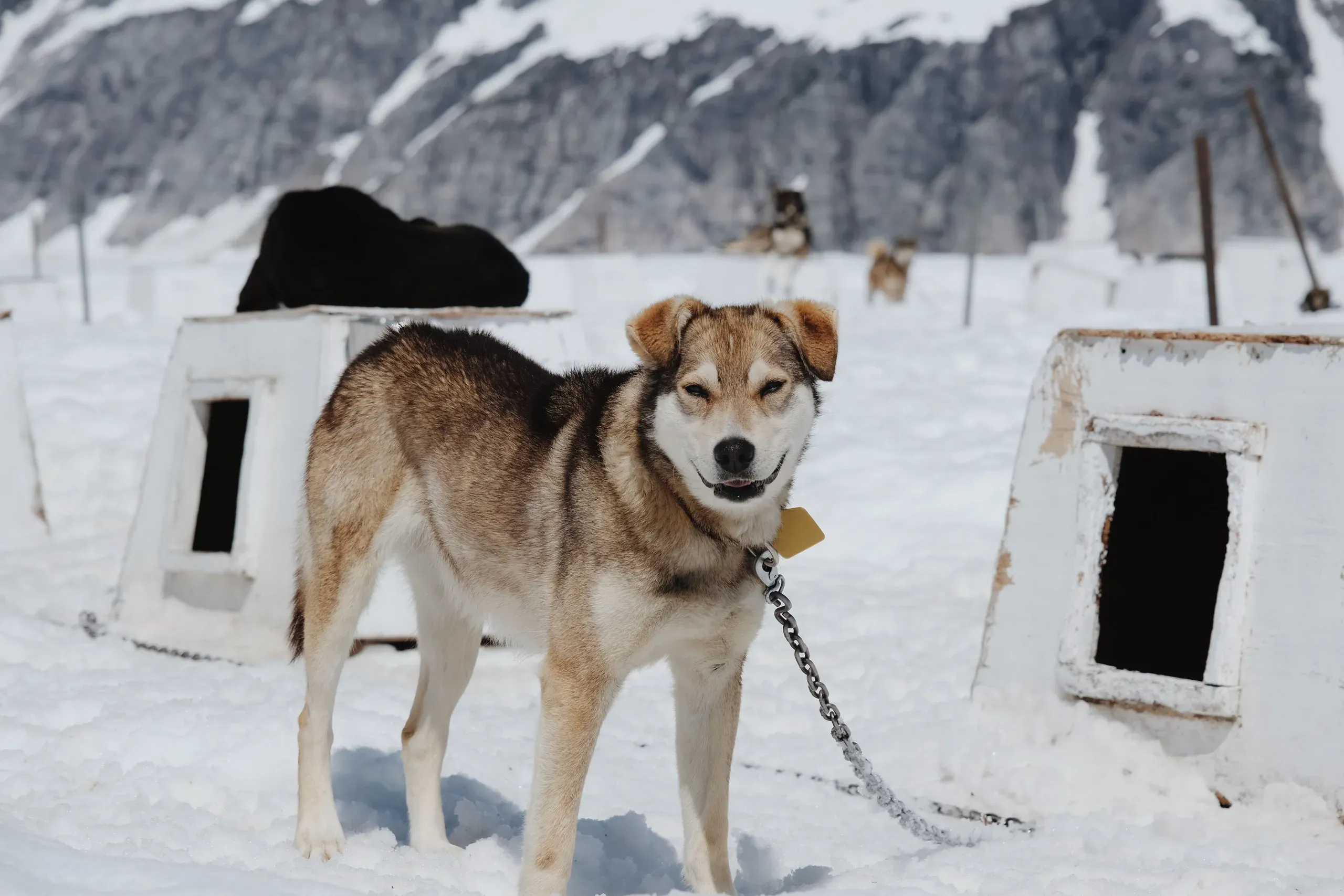
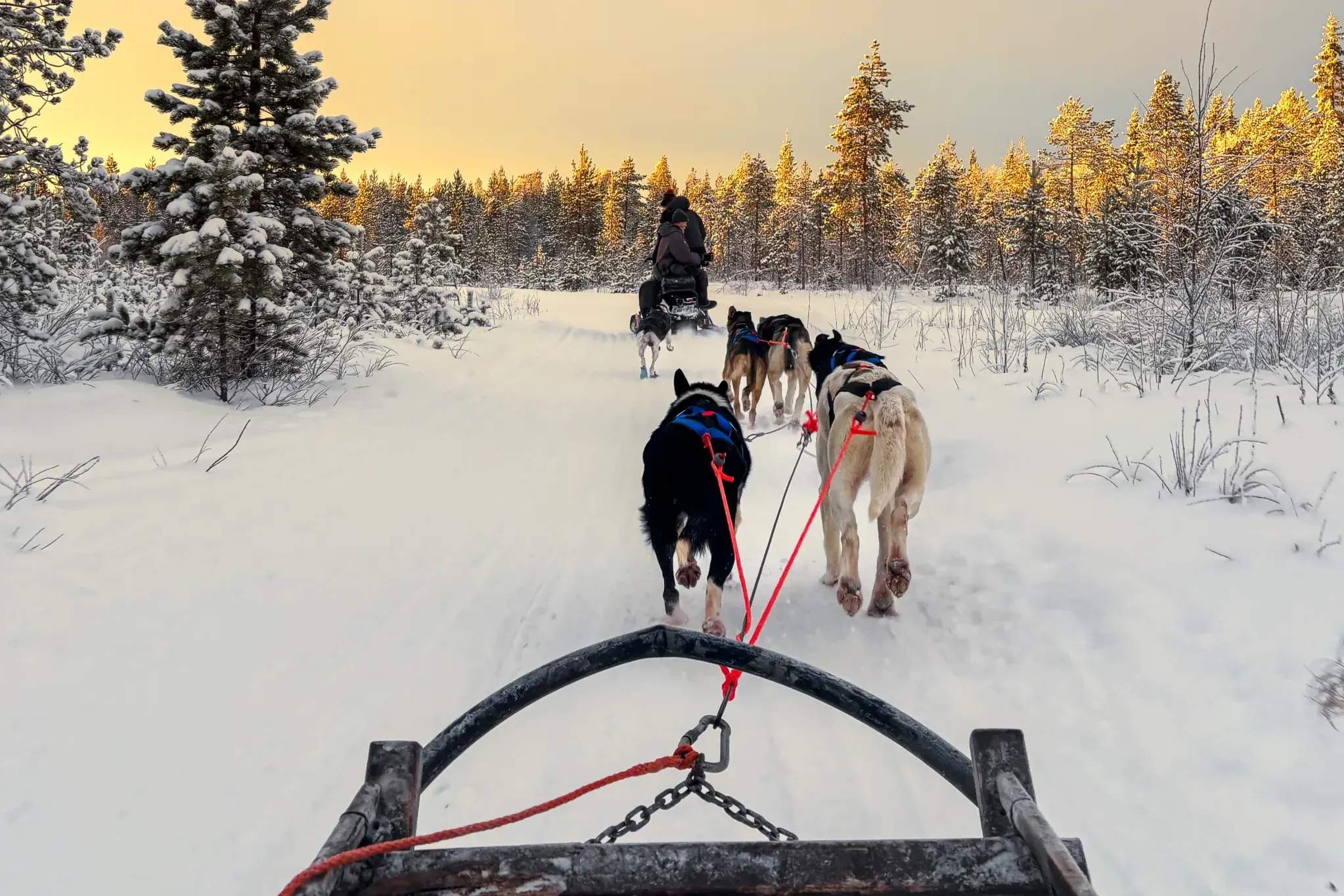
Because the dogs eat all year and earn for a few months. A kennel of sixty to two hundred animals is fed, watered, vetted and housed for 365 days a year, and Lapland's tourism is concentrated into a winter that foreign visitors fill and Finns largely do not: 3.7 million foreign overnight stays were registered in the region in 2023, and in winter Finnish Lapland takes 76 per cent of the Nordics' foreign nights while domestic stays fall to about a quarter. Spread a year of upkeep across a few months of selling and the floor price stops looking arbitrary. A tour well below it is not a bargain; it is a shorter trail, a bigger group, or a kennel cutting something.
Forty minutes on a sled for the better part of two hundred euros looks steep
until you count what is standing behind it, which is between sixty and two
hundred animals that have to be fed on the days nobody books.
The operators do not publish their accounts and this page does not pretend to
know them. What is published is the shape of the year, and the shape of the
year explains most of the number.
The season is short and the year is not
Lapland’s tourism is concentrated, and the concentration is extreme. Visit
Finland’s figures put 3.7 million foreign overnight stays in the Lapland
region in 2023, up almost a fifth on the year before. In winter, Finnish
Lapland takes 76 per cent of all the Nordic countries’ foreign overnight
stays – and domestic nights run the other way, about three quarters of
Lapland’s Finnish stays falling in summer and about a quarter in
winter.1
Read that as a kennel owner rather than as a tourist. The customers arrive from
abroad, they arrive in winter, and they stop arriving when the snow goes. The
Finns who fill the region in July are not booking sled rides, because there is
nothing to ride on.
So the revenue is compressed into the months with snow on the ground and
visitors in the hotels. The costs are not compressed into anything.
The costs do not have a season
A sled dog kennel is a farm that the regulator treats as a professional
operation. Since the start of 2024 a dog’s permanent home in Finland must have
unfrozen water available continuously, with a specific exemption for
professional sled dog kennels in freezing weather provided the dogs are watered
at least three times a day. The same rules require the kennel to have the
facilities and equipment needed to inspect and handle the animals, and space to
treat and isolate a sick or injured
dog.2
None of that is seasonal. Watering three times a day is three times a day in
June as well as January, and an isolation pen is a building that exists whether
or not anyone is booking.
Add the parts nobody legislates – feed for a hundred working animals, veterinary
care, harnesses and lines, sleds, the staff who do the feeding, the land, the
trails, the transfer vehicle and its fuel – and the picture is a year of
outgoings against a few months of income.
Tripadvisor ratings, 18 Rovaniemi operators
Highest first
Snowtrail Safaris 5.0
Nordic Odyssey 5.0
Nordic Adventures 4.9
Arctic GM 4.9
Book Lapland 4.9
Bearhill Husky 4.9
Arctic Attitude 4.9
StayLapland 4.8
Wild About Lapland 4.7
Wild Nordic 4.7
Lapland Winter Park 4.6
Safartica 4.5
Nordic Unique Travels 4.5
Apukka Resort 4.4
Lapland Welcome 4.3
Arctic Circle Snowmobile Park 4.3
Arctic Circle Husky Park 4.2
Raitola 3.4
<44.04.55.0
Ratings read from Tripadvisor. The shaded compartment left of the divider holds any score below 4.0. We record the score only; review counts and review text are not part of our comparison.
Which is why the floor is where it is
Divide a year of upkeep by a season of bookings and the published prices stop
looking arbitrary. A self-driven run of six to ten kilometres sits around €196
in Rovaniemi and higher in the fell resorts, which
what a husky safari costs resort by resort
sets out with the figures.
The useful consequence is what it tells you about the cheap end. A tour well
below the local floor is not a kennel being generous. It is one of three
things: a shorter trail, a larger group sharing each sled, or a kennel that is
close enough to town to save the transfer. All three are legitimate, and the
husky safari guide explains how to spot
which one you are buying – the numbers to ask for are trail distance in
kilometres and maximum group size, and an operator that answers both precisely
is telling you something about the rest of its answers.
What a low price is generally not is the same product cheaper.
The part the price cannot tell you
Whether the kennel is a good one. Price and welfare are not correlated in
either direction, and assuming they are is the most common mistake visitors
make about this industry.
The questions that do bear on it – how many dogs, how often each runs, what
happens to a dog that stops working – are not answerable from a booking page at
any price. They are answerable in a kennel yard, which is the practical
argument for
a farm visit rather than a safari if the
dogs rather than the ride are what you came for.
And if the arithmetic here has made you think the price is fair but the forty
minutes still sounds short,
the morning minute by minute is the
page that sets out what the other two hours consist of. Most people find the
answer reassuring.
Not and still sell safaris. A team is six to twelve dogs, and a tour that takes four sleds out at once needs four teams simultaneously, plus the dogs resting that day, plus the ones too young or too old to run. The number of animals is set by the number of sleds a kennel wants on the trail at nine in the morning, and cutting it does not reduce the cost per booking – it reduces the bookings. This is why small kennels are not cheaper than large ones and are often dearer.
Where do the dogs go in summer?
Nowhere; they stay at the kennel, which is most of the point of this page. Some kennels run summer programmes – cart training, farm visits, puppy seasons – and a few operate a visit-only product from spring to autumn, but none of it approaches winter revenue. The upkeep does not pause: feeding, vet care, kennel maintenance and staff continue through the months when there is nothing to sell, and that gap is carried by the winter price.
Is a cheaper safari worse for the dogs?
Not necessarily, and it would be lazy to say so. A cheaper tour is usually a shorter trail, a larger group or a kennel close enough to town to save a transfer, and none of those is a welfare question. What is worth asking, at any price, is how many dogs the kennel keeps, how often each one runs and what happens to a dog that stops working – and you can only ask that where you can see the yard, which is an argument for a visit rather than a ride.
Lapland Handbook is written by its editorial staff in Rovaniemi. Every price, age limit and group size in a comparison is read from the operator's own page and marked "Not stated" when the operator does not publish it. Each guide names who should not book, and names the operator that suits each kind of group, whichever it is.
Rovaniemi's winter tours do sell out – December and the week around New Year first, and the small-group ones before the rest. Booking here goes straight to the operator at their own published price, and the code LH10 takes 10% off it.
We would like to count visits, so we can see which guides get read. That needs a cookie. Nothing else on this site does, we show no advertising, and refusing changes nothing about what you can read or book. What we measure and why.