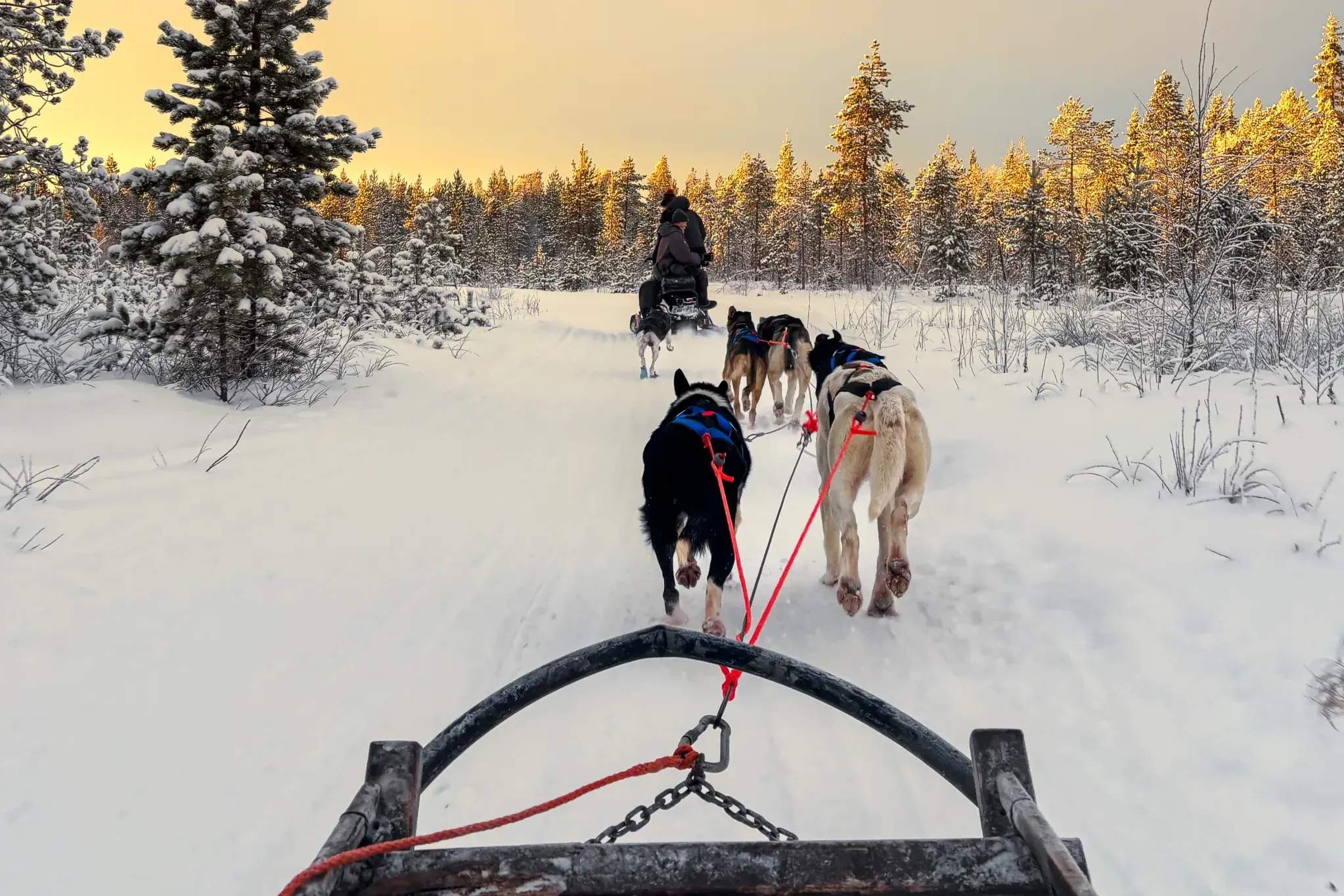
Every comparison of husky safaris across Lapland is a price list, and the prices turn out to be the least interesting thing about the question. A self-driven run of six to ten kilometres costs modestly more in Levi, Ylläs and Saariselkä than in Rovaniemi, and what each resort actually publishes sets those figures out alongside child fares and the rules about who may drive.
What none of it tells you is the two things that really change when you move north, and both are about the calendar rather than the tour.
The season is longer at both ends
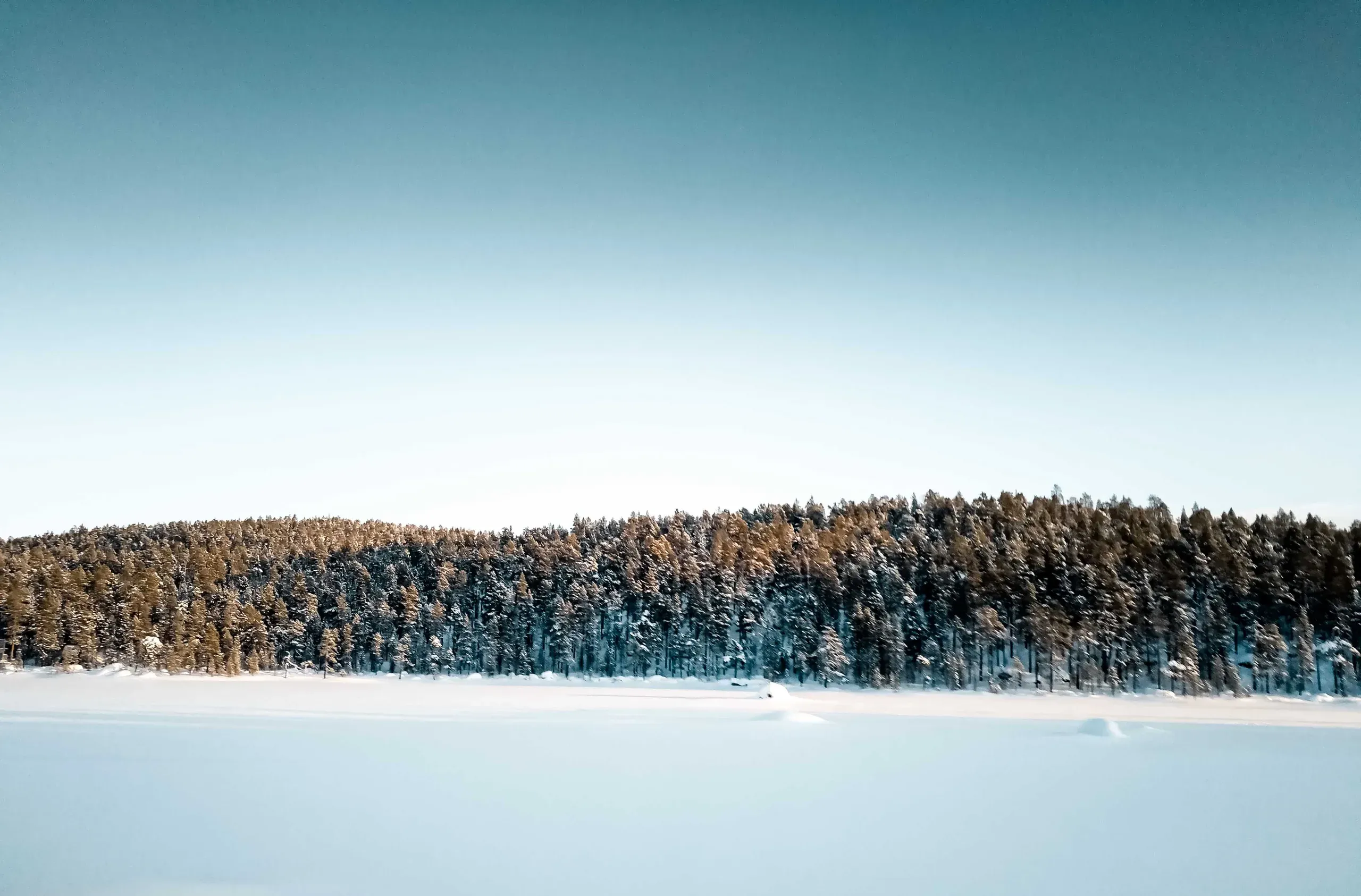
Snow cover in Finland is measured, and the numbers are striking. At Sodankylä, north of Rovaniemi, permanent snow lies for an average of 203 days a year – about seven months. At Helsinki it averages 97, a little over three. The longest run ever recorded at Sodankylä was 229 days, from 5 October 1968 to 23 May 1969, and in the northernmost part of the country the snow regularly lingers to the end of May.1
For a husky trip this matters at the edges of the season rather than in the middle. A trail that is reliably snow-covered in early November, or still running in the second half of April, is much easier to find in Saariselkä or at the Kittilä fells than around Rovaniemi. If your dates are awkward – a half-term at the start of November, a late Easter – that is a real reason to look north.
Between Christmas and the middle of March it stops being an argument. The whole region has snow, cancellations are about weather rather than latitude, and the difference between resorts is which operator happens to have space.
December daylight is not a detail
The other thing that changes is the light, and it changes faster than most visitors expect.
Rovaniemi sits on the Arctic Circle, which is exactly the line where the Meteorological Institute puts the southern limit of the midnight sun – and, in winter, the line north of which the polar night happens at all. Go north and the polar night arrives and lengthens quickly: four days at Sodankylä, just before Christmas, against almost two months at Nuorgam at the top of the country, from 25 November to 17 January.2
Saariselkä and Inari lie between those two, so a December husky tour there is run in twilight and headlamps rather than daylight. The same darkness is the best thing about the place after sunset, which northern lights in Saariselkä takes on its own terms. That is genuinely beautiful and a great many people prefer it. It is also not what most families have pictured, and it is the single most common surprise about booking an activity in the far north in December.
The same arithmetic in reverse is one of the better arguments for Rovaniemi with a young family: the month-by-month activity guide sets out what is running when, and a two-hour window of proper daylight in the middle of a December day makes a short afternoon tour possible in a way it is not two hundred kilometres north.