Many visitors arrive in Rovaniemi expecting to meet Sámi culture, and the town does not always correct them. It helps to start from what the Sámi themselves have written down, because the Sámi Parliament in Finland has done exactly that.
Rovaniemi is not in the Sámi Homeland
The Sámi Homeland in Finland is the northern part of Lapland: the municipalities of Enontekiö, Inari and Utsjoki in full, and the northern part of Sodankylä around Vuotso.1 Rovaniemi lies well to the south of it.
That does not mean there are no Sámi in Rovaniemi. It means that a tourist product in Rovaniemi presenting itself as the Sámi way of life deserves a second look, and that a trip built around Sámi culture belongs further north.
What the Sámi Parliament calls exploitation
In 2018 the Parliament adopted principles for responsible and ethically sustainable Sámi tourism. Their main aim is to end tourism that exploits Sámi culture and to remove false information about the Sámi from tourism.1
Two ideas in them are worth knowing before you book anything. The first is the invented tradition: something made up for a purpose and presented as an old custom. The principles call the product sold to tourists as a “Lapland baptism” one of the most blatant examples, an invention with no basis in Sámi culture that shows the Sámi as dirty and primitive. In the same category they put cheap imported “handicrafts” marketed as Sámi, stories made up for tourism and claimed to be Sámi, imitations of joik, and linking the Sámi with fairy-tale figures such as Santa Claus. The touristic use of the drum, part of the Sámi spiritual tradition, they count as cultural appropriation.3
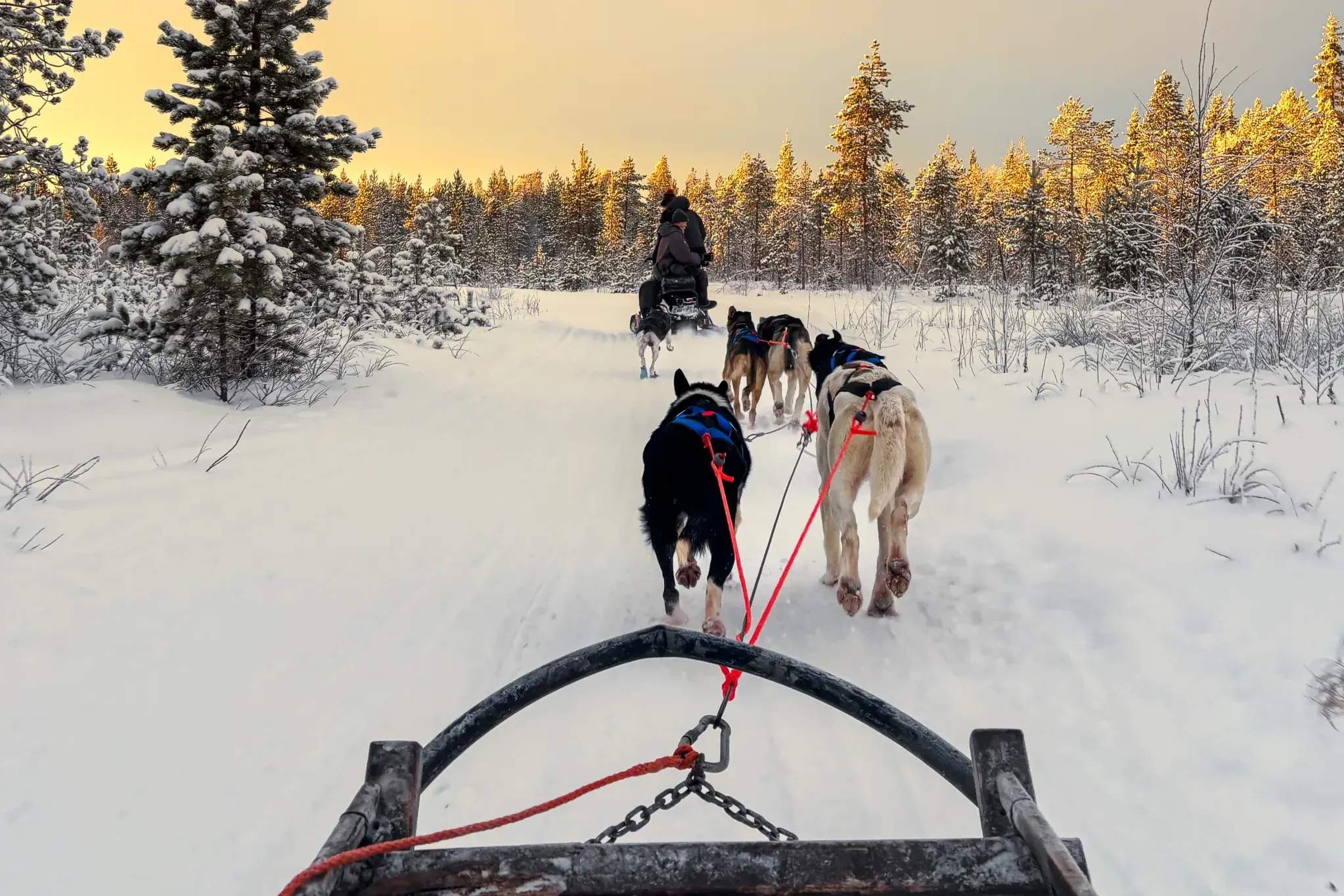
The second is the borrowed tradition, a custom taken from another culture and planted where it does not belong, and the example the Parliament gives may surprise visitors to Lapland. It names touristic dog sledding, which it says the tourist industry brought into Lapland in the 1980s, as a particularly damaging and culturally unsustainable borrowed tradition, in strong conflict with reindeer herding in some areas, and it says that marketing dog sledding to tourists in the Sámi Homeland should stop. Its other example is the tourist structures called igloos.3
This page takes no position of its own on it; it is the Parliament’s view, stated plainly, and anyone booking a husky safari in the far north should know it exists.